
Collaborative Networks
Collaborative Networks - Drivers of Successful Transformation
In the modern corporate world, collaborative networks enable the harnessing of synergies, enhancing performance and innovation, and tackling complex challenges through joint efforts. Despite their growing importance, the management of these networks remains largely intuitive and insufficiently professionalized.
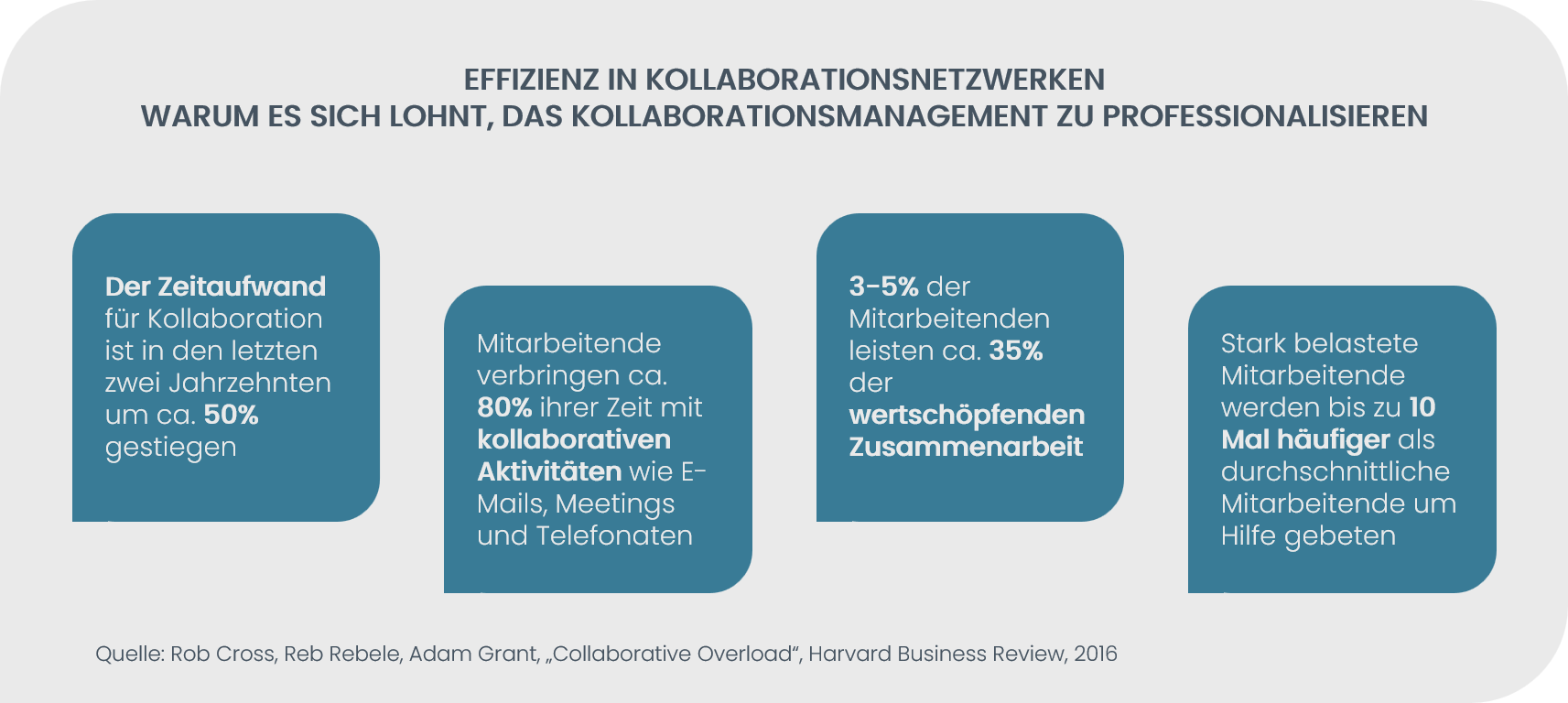
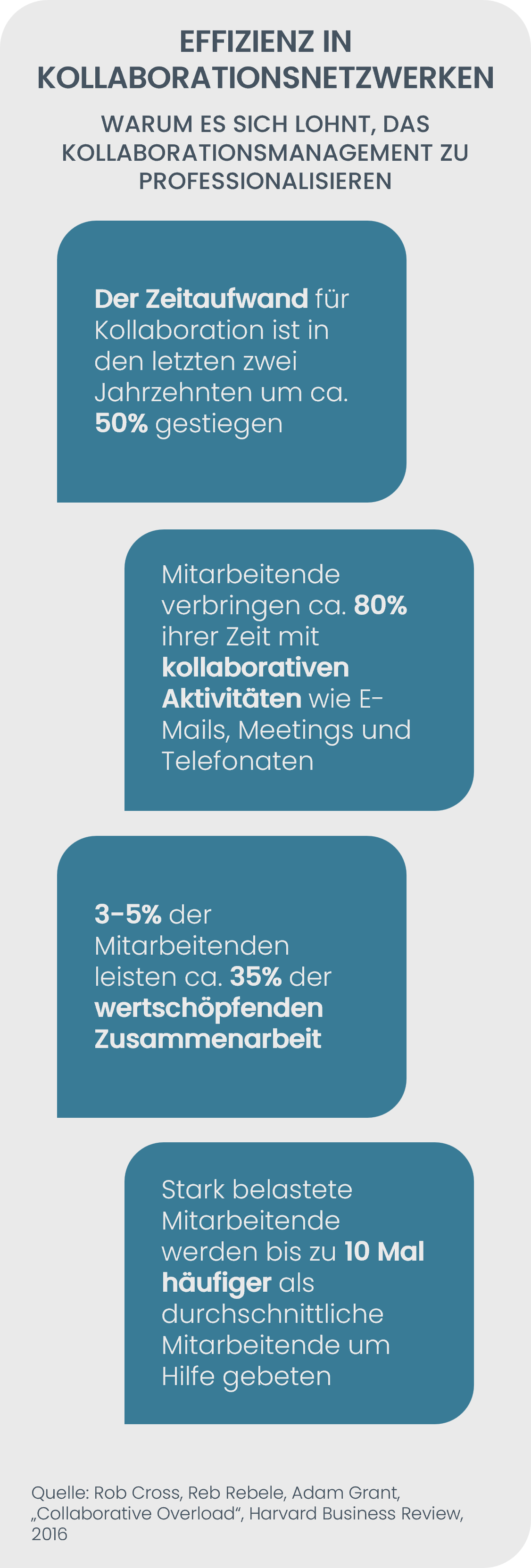
The growing importance of collaborative networks is evident in many areas, from science and research to business and social and political movements.
For example, the COVID-19 pandemic has clearly demonstrated the role of collaborative networks in addressing complex challenges, both across countries and within companies. In daily business, collaborative networks are indispensable for modern companies. They enable faster responses to market changes through the efficient use of technologies, data, and know-how. In times of skilled labor shortages, they provide access to a broader talent pool. Companies that invest in networks are often industry leaders and set new standards.
From a corporate governance perspective, collaborative networks are rarely the focus. The primary focus is on the organizational structure and its documented process models. As a result, companies are very transparent in the central dimensions from an organizational perspective. It is unthinkable to want to manage a modern organization without this information:
- What is the logic of the structure (e.g., functional, regional, customer-centric)?
- How many management levels are there?
- What is the number of organizational units and their employees?
- What are the goals, budgets, and responsibilities of the organizational units?
- How are the core processes designed, and what is their degree of automation?
However, these dimensions only describe part of the reality in organizations. The recurring patterns of collaboration, as well as the intensity and quality of interactions that are crucial for synergy effects, performance, and innovation, are often only rudimentarily or not at all in focus.
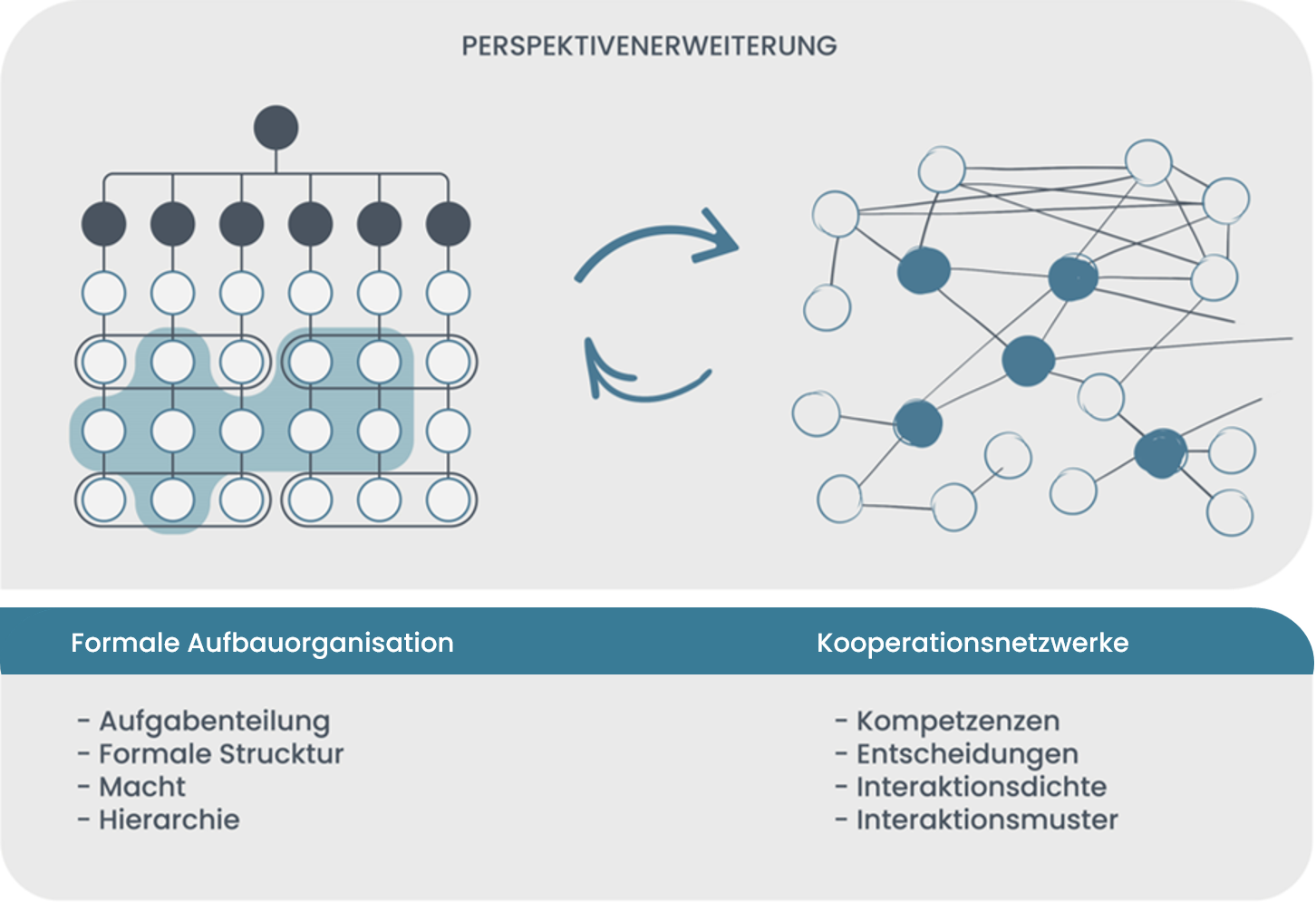
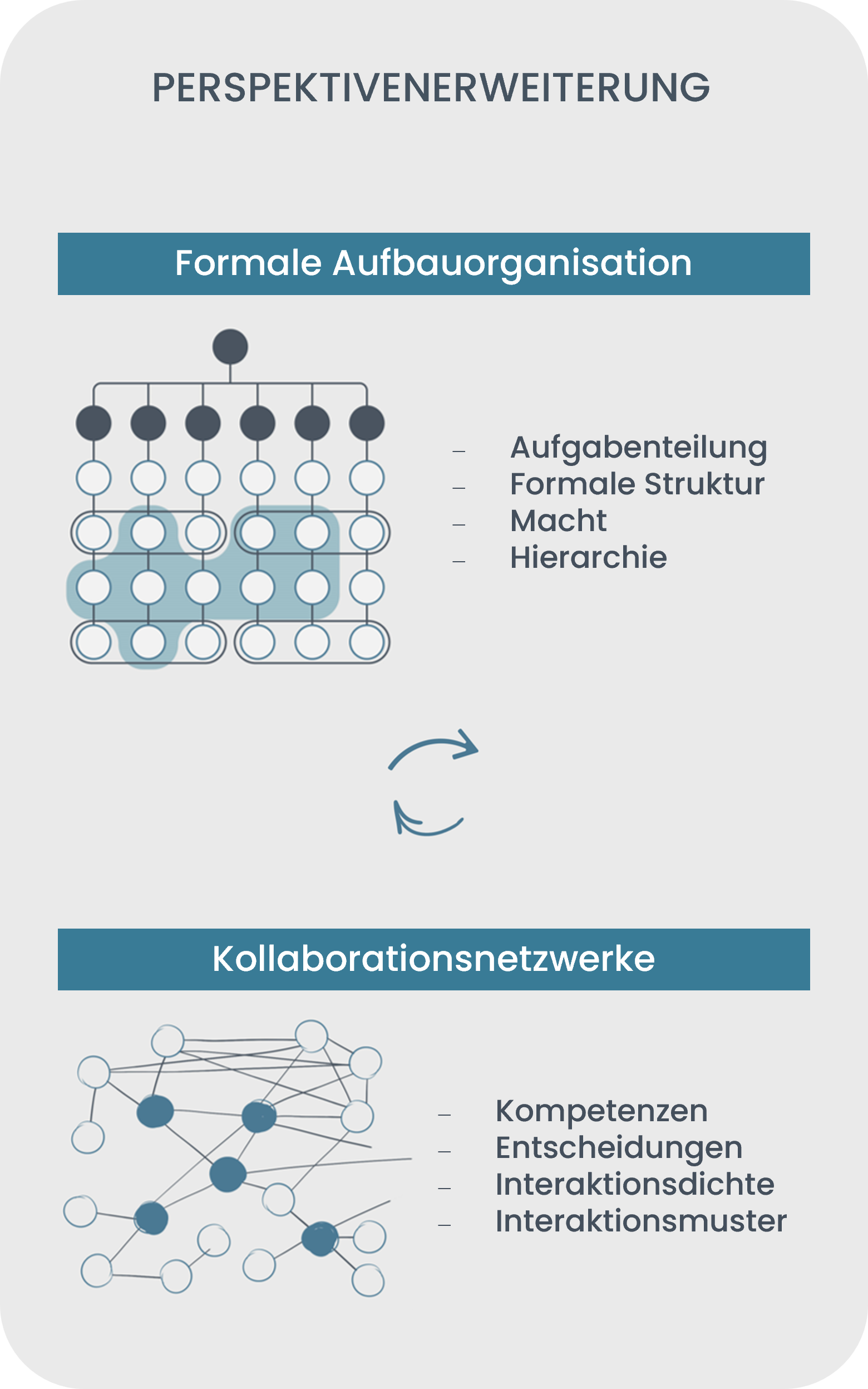
Therefore, it is worthwhile to broaden the perspective and make the mechanisms of collaborative networks more transparent and manageable. This perspective focuses less on formal units and their proverbial hierarchical arrangement. Instead, the focus is on the exchange relationships ("edges") between these units ("nodes").
To professionalize the management of collaborative networks, there's no need to reinvent the wheel. The well-known tools of corporate management simply need to be expanded and reorchestrated. Essentially, four key areas of action can be identified:
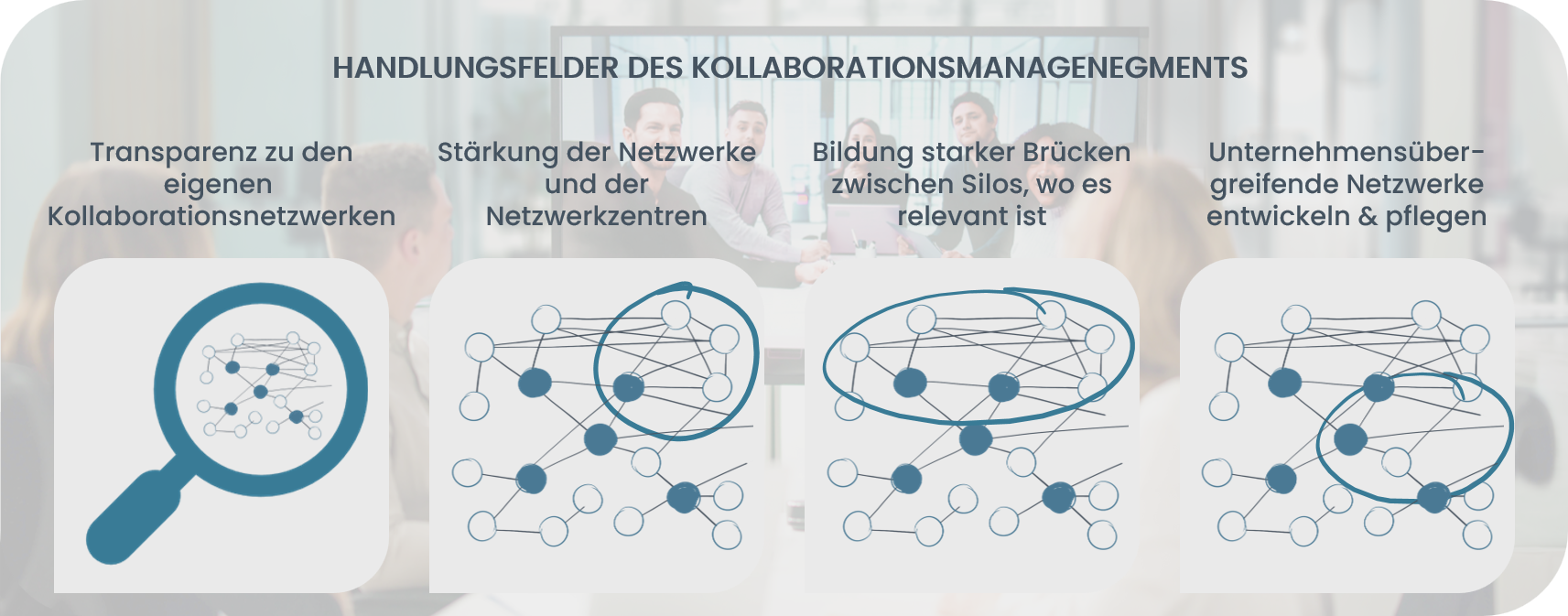
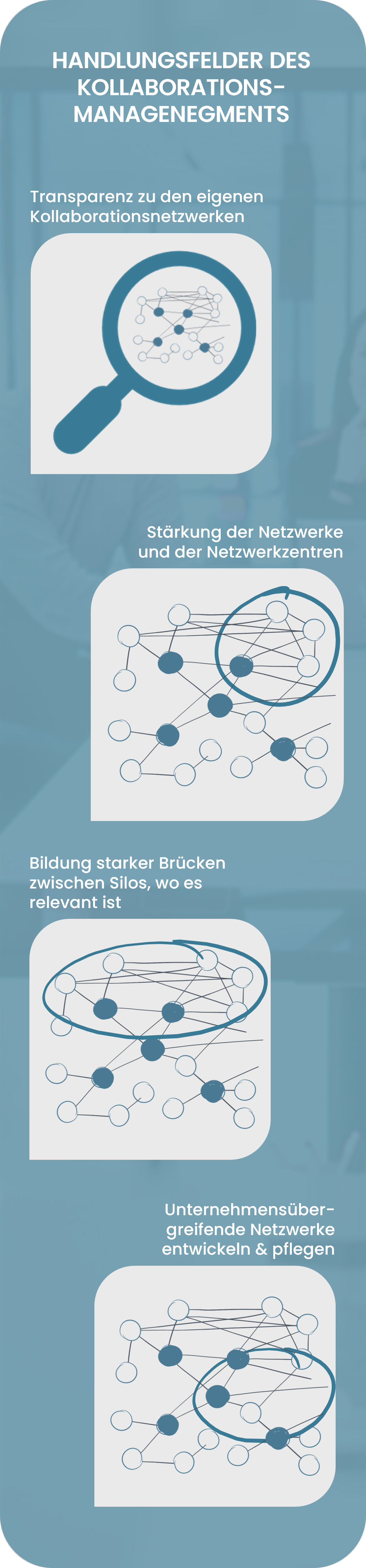
Transparency in Collaborative Networks
The following questions are important when it comes to transparency in your own collaborative networks:
- What are our most important internal/cross-functional collaborative networks?
- What goals do the collaborative networks pursue, and how effective and efficient are they?
- How is the intensity and quality of collaboration within the network measured?
- Who makes which decisions?
Who manages the network?
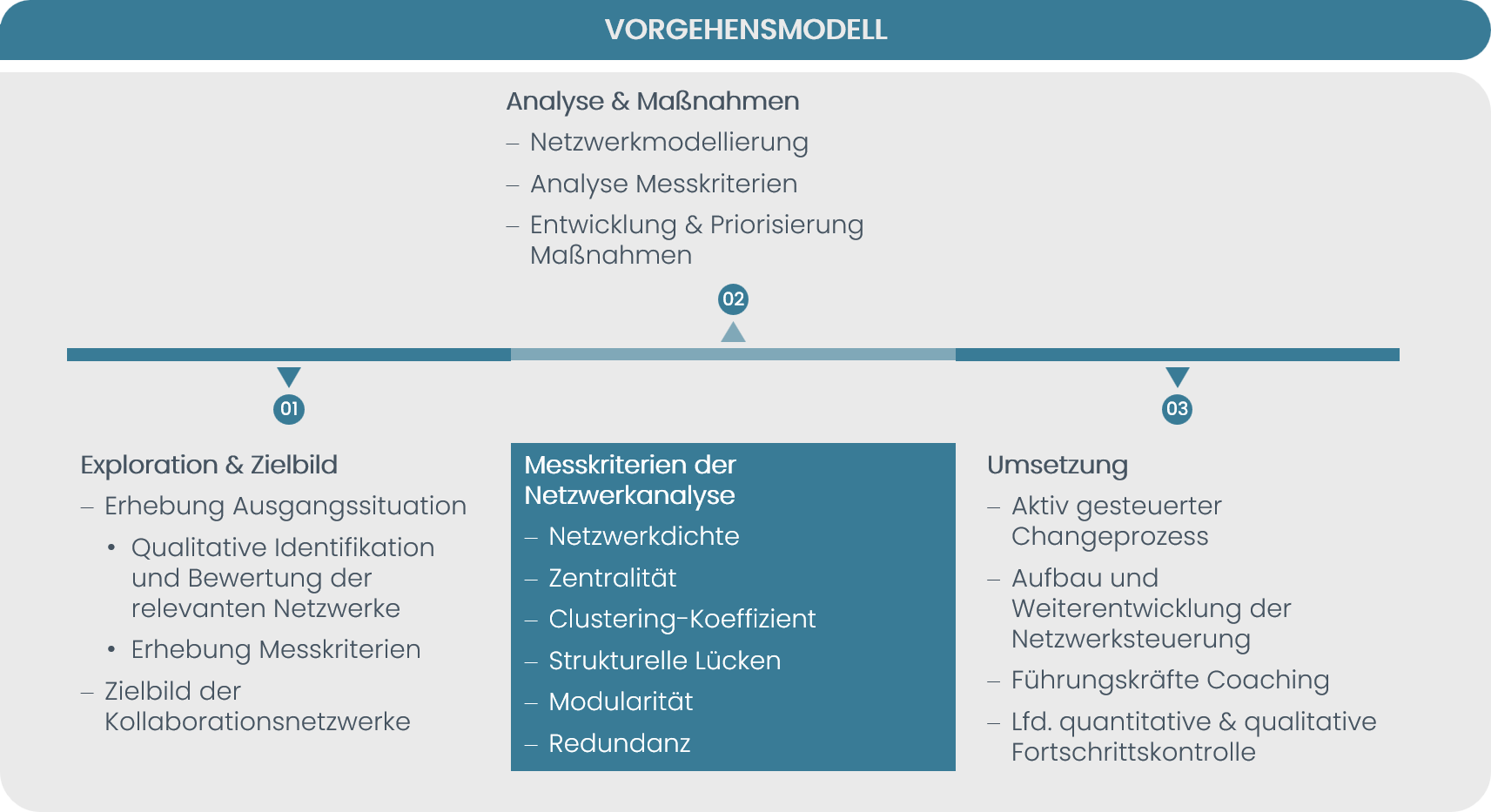
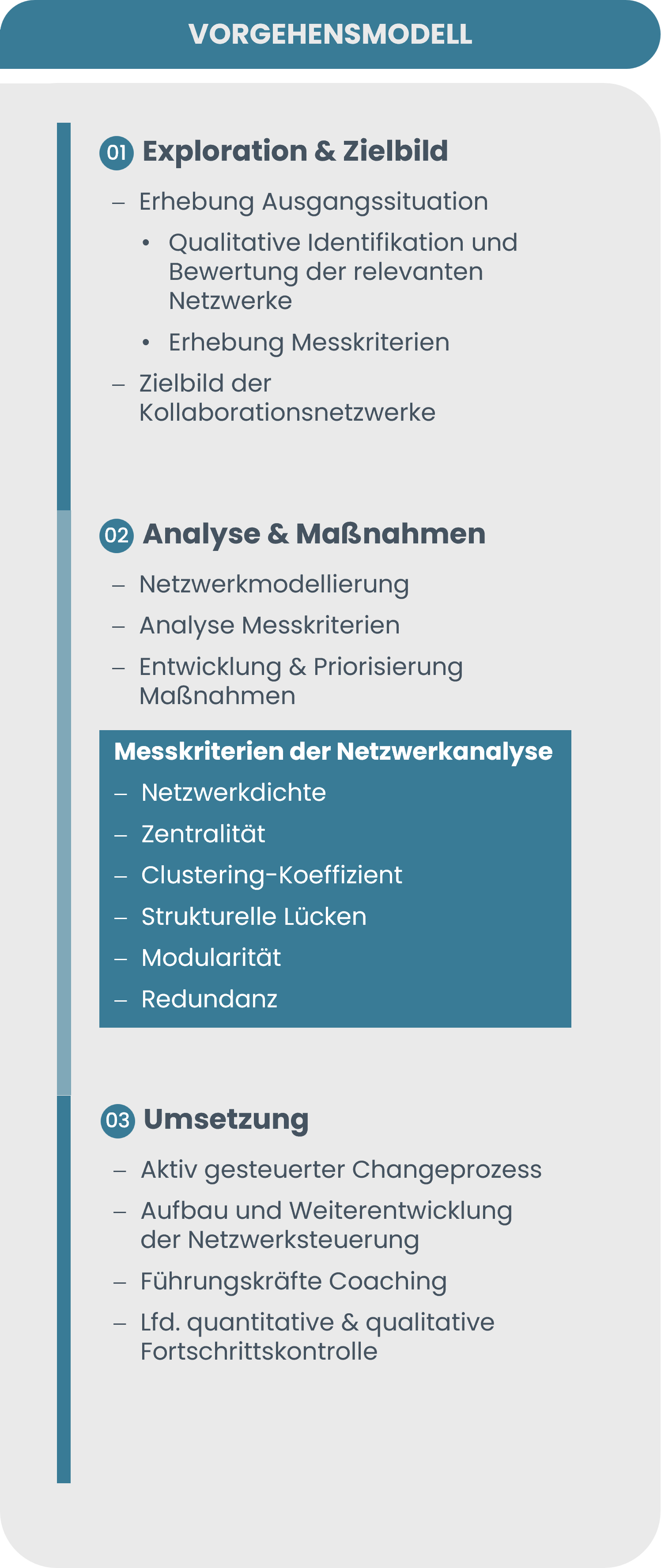
A multi-step approach that combines both qualitative and quantitative methods helps answer these questions. First, the relevant networks are identified and modeled. In the next step, the effectiveness and efficiency of the identified networks are evaluated based on established criteria. The following criteria have proven effective:
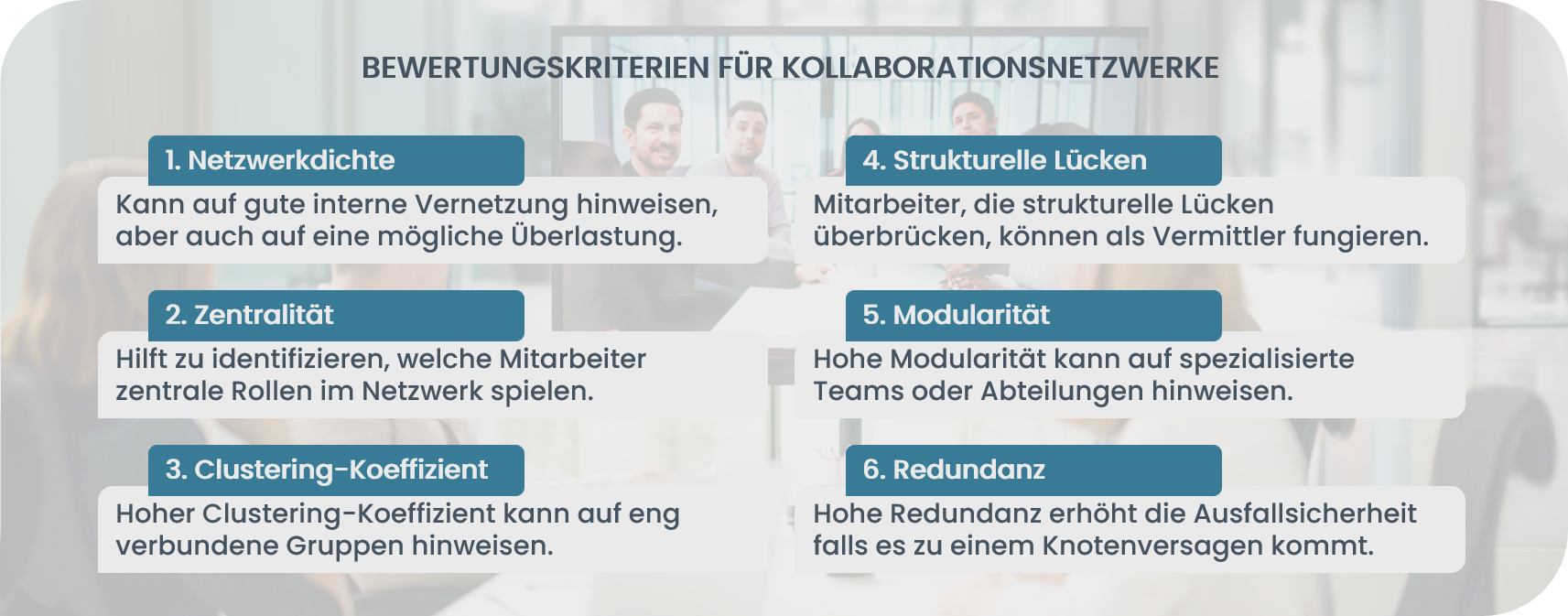
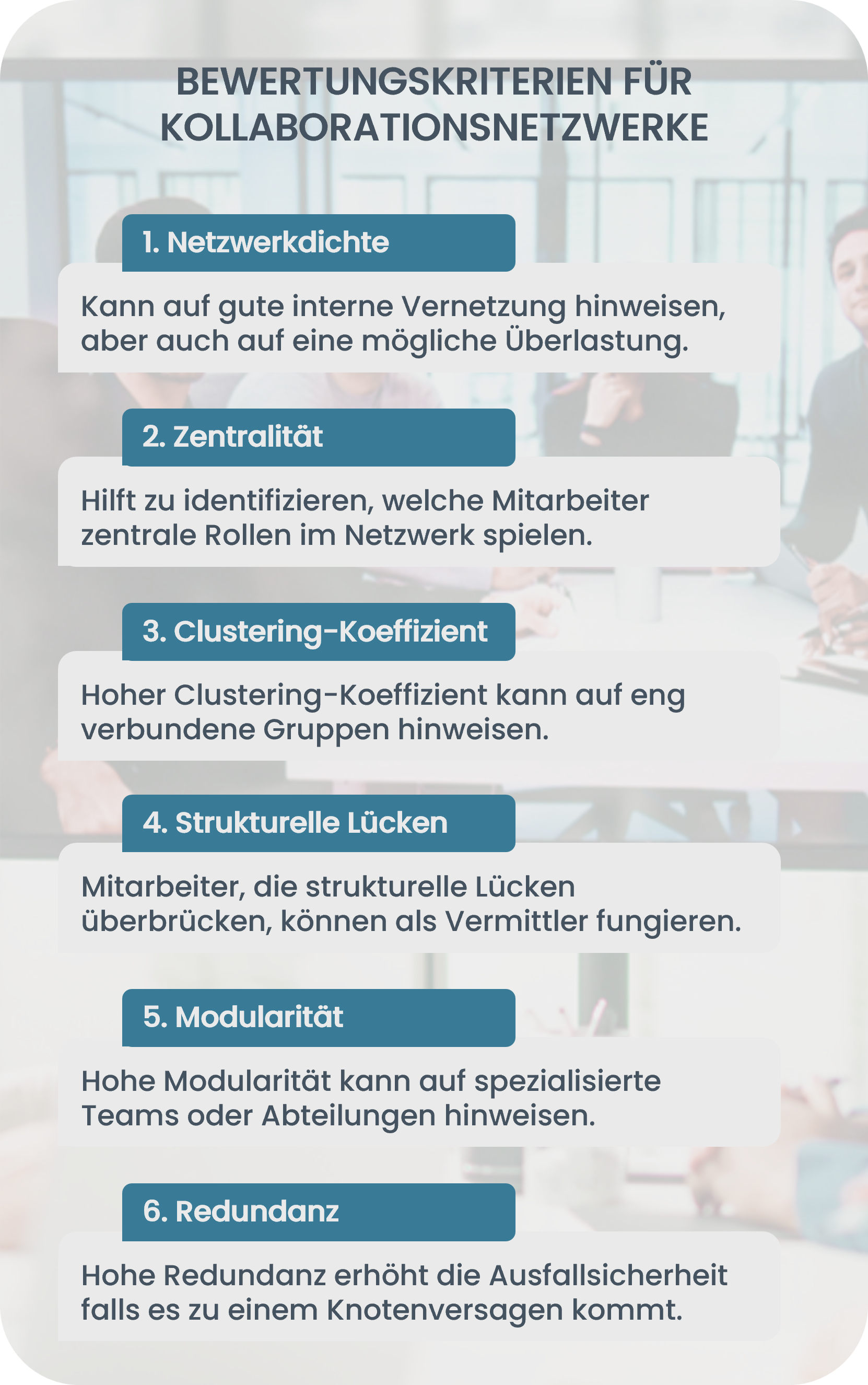
The measurement of these criteria can be pragmatically conducted using existing tools or surveys.
Strengthening Networks and Their Centers
Team development tools can generally be applied to individual network clusters. However, the differences between collaboration clusters and formal teams must be considered.
Strengthening clusters requires a flexible and adaptive approach. Measures here aim more at identifying and expanding common interests and synergies rather than pursuing predefined team goals.
In collaborative networks, centers play a crucial role in information flow and coordination. These central actors can be identified through network analysis techniques. They often stand out due to a high number of connections or a strategically advantageous position within the network. It is important to avoid overloading the centers and to also involve peripheral actors to leverage innovation potential and ensure resilience. The relationship between network centers and line managers must also be continuously reviewed and balanced.
Building Strong Bridges Between Silos
To build and support strong bridges between organizational silos, it is crucial to combine various approaches that promote exchange and collaboration. First, it is important to develop a shared vision supported by the involved organizational units and their respective line managers. This vision creates an overarching goal and a common understanding of how the work in the silos contributes to overall success. Furthermore, a culture of trust and respect is of great importance. When employees feel that their contributions are valued and they can rely on the support of their colleagues, it strengthens the willingness to collaborate across silo boundaries.
In all this, line managers play a central role. They should actively promote interdisciplinary collaboration and model a culture of collaboration.
Developing and Maintaining Cross-Company Networks
Cross-company networks offer significant strategic advantages by providing access to new markets, technologies, and resources. They promote the exchange of knowledge and ideas, which increases innovation and helps companies remain competitive in a dynamic economy.
Building cross-company networks begins with identifying potential partners who possess complementary skills, resources, or market positions. These partners should share compatible values and goals to ensure stable and productive collaboration. It is important to set clear goals and expectations for the partnership and initiate joint projects that promote the exchange of knowledge and resources. Building trust is crucial, which can be achieved through transparent communication, reliability, and creating win-win situations.
It is not surprising that companies already excelling in developing internal collaborative networks are significantly more successful in building cross-company networks.
Approach Model for Developing and Optimizing Collaborative Networks
The presented approach model provides a framework for companies to analyze, systematically expand, and improve their networks. It should be understood as an iterative process, with phases being cycled through repeatedly.
Focus Areas

Treasure Hunt Instead of Chess
How to Implement Strategy Sustainably and Successfully
In the VUCA world, the strategy process is much more than a planning process. Reality confronts us with uncertainties...

Away with Bureaucracy!
Self-Responsibility & Goal Orientation as Foundations of Agile Transformation
Increasing complexity in the framework conditions has regularly led to increased internal complexity in the past...

The Silo Saga
Why It's About Building Strong Bridges Instead of Fighting Silos
The term silo is commonly used to criticize the lack of cross-functional collaboration in companies. In a...

Coffee Breaks as Cultural Heritage
The Evolution of Corporate Culture in Hybrid Work Models
Hybrid work models present new challenges to all dimensions of corporate development...

Operational Stability
Stability and Success in Daily Operations as the Foundation of the Change Process
Change causes uncertainty. This fact is well-known, and there are numerous intervention possibilities...

Leadership 4.0
Not Just Steering the Boat but Also Riding the Wave
Agility challenges traditional leadership narratives. It's no longer just about "having everything under control"...